

Fumigation in Ventura
When termites or other pests move deep into your home’s structure, especially drywood termites, We can help. Lenz is your trusted choice for professional Fumigation in Ventura.
What is Fumigation?
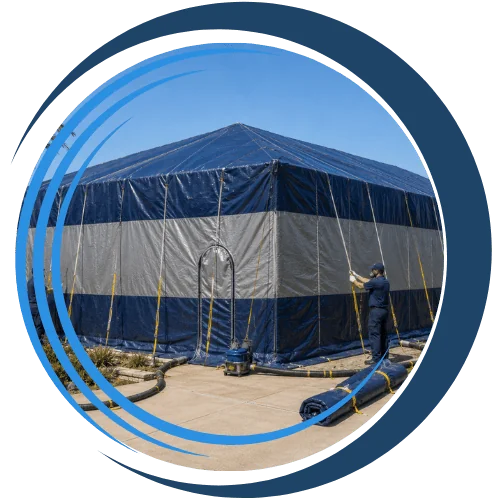
Fumigation is a targeted pest control process designed to eliminate severe or hidden infestations. First, We seal your property under a secure tent; then a gas fumigant is released, and it moves through wood, walls, and insulation—so pests are eliminated at every stage.
Fumigation Is Often Used For
- Drywood termites
- Wood-boring beetles
- Bed bugs, especially when infestations are severe
- Other pests living deep inside structural wood
Overall, it’s a complete whole-home approach that reaches spaces standard spot treatments often cannot access.

How Long Will Fumigation Typically Take?
In most situations, fumigation usually takes about 2 to 3 days; however, the exact timeline depends on your home’s size and the level of infestation.
Here’s a Typical Schedule
Day 1: Preparation is finished and the fumigant is released
Day 2: The structure stays sealed while the treatment works
Day 3: Aeration is completed, and clearance testing is done before you return
Afterward, We’ll create a schedule that fits your home and, moreover, keep you updated throughout the entire process.

Our Fumigation Process
At Lenz Pest Control, We follow a detailed, licensed process so your fumigation is effective and, moreover, as smooth as possible:
Inspection & Assessment
Our licensed inspector checks your property to determine whether fumigation is the right option, based on the pest type and infestation level.
Scheduling & Permits
After We confirm it’s necessary, We schedule your fumigation date and manage any required permits with local or state agencies.
Tenting & Sealing
Next, We cover your home with durable tarps and seal it completely, ensuring the fumigant gas remains contained.
Fumigant Application
Then Our team releases the fumigant inside the sealed structure, allowing it to move deep into every affected space.
Aeration & Clearance Testing
Finally, once the treatment period is complete, We perform professional aeration. Afterward, We test the air and confirm it’s safe before clearing you to re-enter your home.

How to Get Ready for Fumigation
Proper preparation is essential for successful fumigation. We’ll give you a complete checklist; however, here are key steps to begin:
- Remove everyone, including pets and plants, from your home before treatment starts.
- Double-bag all food and medications with the Nylofume bags We provide.
- Unplug appliances, and leave interior doors open so the gas can move throughout your home.
- Plan ahead for 2–3 nights away, because you can’t return until the structure is cleared.
Ultimately, Our termite team will guide you through each step so everything is handled safely and correctly. Contact Lenz Pest Control today for a free termite inspection in Ventura!
Reviews from Our Customers
FAQ's
How do I know if my home needs fumigation?
Fumigation may be needed when termites or other pests are widespread, hidden inside structural wood, or difficult to reach with localized treatments. Common warning signs include drywood termite pellets, damaged wood, discarded wings, hollow-sounding areas, or recurring infestations after prior treatments. In Ventura, a professional inspection can help determine whether fumigation is necessary or if another treatment option is more appropriate.
What pests does fumigation typically treat?
Fumigation is most often used for drywood termites, but it may also be recommended for certain severe infestations of wood-boring beetles, bed bugs, or pests living deep inside walls, wood framing, or other hidden areas. Because fumigation reaches enclosed spaces throughout the structure, it is usually considered when pests cannot be controlled effectively with spot treatments alone.
How much does fumigation cost in Ventura, CA?
The cost of fumigation depends on several factors, including the size of the structure, infestation severity, accessibility, preparation needs, and any required permits. Larger homes or complex structures typically cost more than smaller properties. The most accurate way to estimate pricing is to schedule an inspection so Lenz Pest Control can evaluate the property and recommend the right treatment plan.
How long do I have to stay out of my home during fumigation?
Most fumigation projects require homeowners, pets, and plants to be out of the home for about two to three days. The exact timeline depends on the structure, treatment plan, and required aeration period. You should not re-enter the home until licensed professionals complete clearance testing and confirm the property is safe for occupancy.
What should I do before my home is fumigated?
Before fumigation, you’ll need to remove people, pets, and plants from the home. Food, medications, and certain consumables may need to be removed or sealed in approved bags. You may also need to open interior doors, unlock spaces, and make lodging plans. Lenz Pest Control provides preparation instructions so you know exactly what to do before treatment begins.
Is fumigation better than spot treatment for termites?
Fumigation and spot treatment serve different purposes. Spot treatments may work for limited, accessible termite activity, while fumigation is often recommended when drywood termites are widespread or hidden in multiple areas. If the infestation is difficult to isolate, fumigation may provide more complete structural coverage. An inspection helps determine which option fits your Ventura home.
Does fumigation prevent termites from coming back?
Fumigation is designed to eliminate the active infestation inside the treated structure, but it does not create a permanent barrier against future termite activity. Termites can return later if new colonies find access to the home. Ongoing inspections, moisture control, wood maintenance, and prompt treatment of new activity can help reduce the risk of future termite problems.
